

Kayak vs. Paddleboard on the River Tyne: Which Is Better for a First Trip?
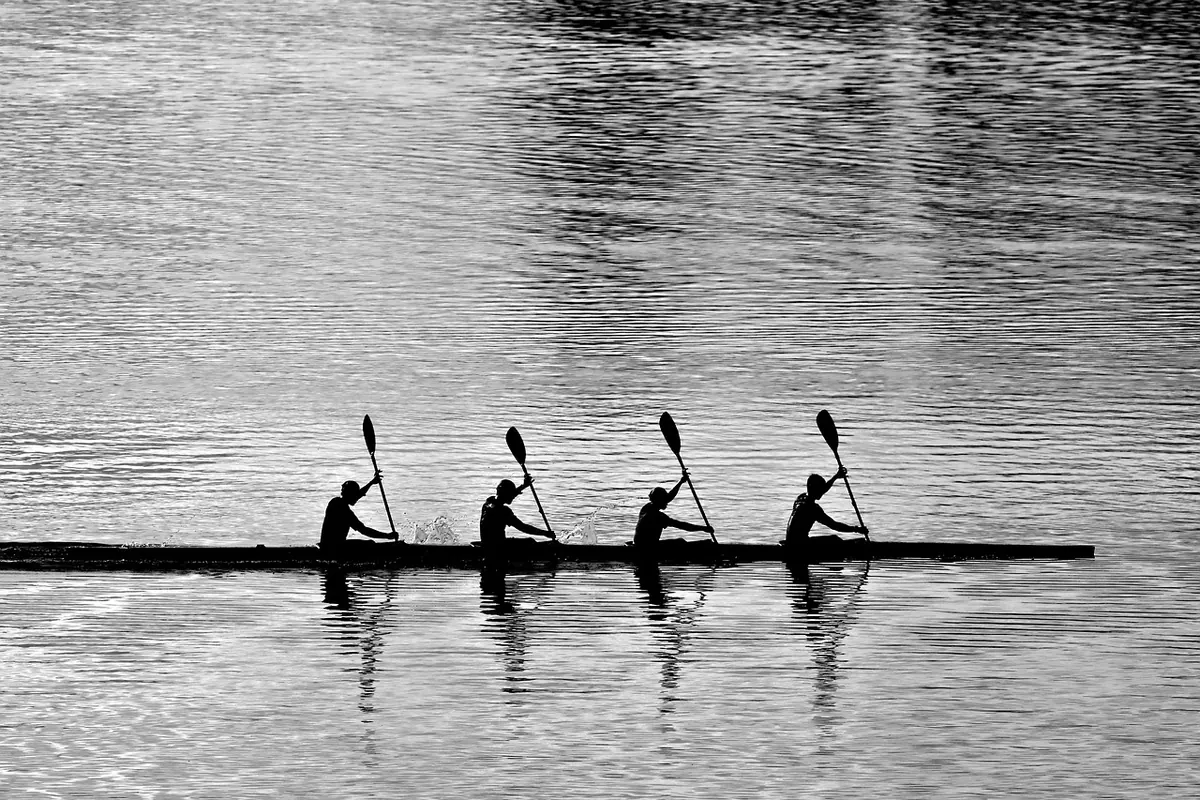
Two craft, one river. A kayak and a paddleboard will both put you on the Tyne, and on the right day either one is a fine way to spend three hours. The differences show up in the details: how the craft behaves when the tide turns against a westerly off the Quayside, how easily you carry it down a set of stone steps, and how tired your shoulders feel on the way back to the car.
What follows is the practical version of that comparison, for someone who has never paddled the Tyne and wants to get the first trip right.
The Tyne is two rivers with one name
The river changes character at Wylam. Upstream of that point, around Hexham, Corbridge and Riding Mill, the Tyne is shallow and quick, with gravel beds, trees along the bank and a few weirs best treated with respect. It is not tidal up there, and on a summer morning it is forgiving water.
Below Wylam, everything changes. The water is tidal, rising and falling by several metres on a spring tide, and the current can run hard enough to make you work for every metre. You share the channel with rowing eights, anglers, the Shields ferry and, occasionally, commercial traffic. Newcastle Quayside and the run down towards Tynemouth are genuinely spectacular places to paddle. They are not the place to learn your first strokes on a breezy afternoon.
Stability: where a kayak earns its keep
A sit-on-top kayak is the most forgiving beginner craft on the river. It is wide, self-draining, and if you do tip it you simply climb back on. A sit-inside kayak is faster and drier in chop, but it asks more of you and it fills with water if you swim.
Paddleboards are more stable than they look, and modern inflatables are genuinely solid — but only when pumped up properly. Under-inflate a board and it bends in the middle like a wet biscuit, which is the single most common reason beginners find them wobblier than expected. In flat water a wide all-round board at 32 to 34 inches across is comfortable. Add a gusty headwind, a passing wash from a boat, or the confused water under the bridges at half tide, and a board becomes a balancing act.
If you want to stay dry and steady, the kayak wins. If you want to sit down, kneel or stand as the mood takes you, the board gives you options a kayak can't.
Speed, range and effort
A kayak is generally faster for the same effort. You sit lower, catch less wind, and use your legs and torso as well as your arms. Over an hour, a beginner in a kayak will usually cover noticeably more ground than a beginner on a board — often twice as much.
That matters on the Tyne because of the tide. Plan a trip downstream on the ebb, turn around after a break, and you can ride the flood back. Get it wrong and you'll be paddling into a current that does not care how good your technique is. A kayak gives you a bigger margin for error.
Boards have their own advantage: they are easy to stop, easy to sit on with your legs in the water, and easy to relaunch from after a swim. On a calm, neap-tide morning between Newburn and Wylam, a board is a lovely thing to be on.
Pick the craft that matches the water and the forecast, not the one that looks best on the roof rack.
Gear: what you'll actually be carrying
Both craft share most of the same kit list. The differences are small but worth knowing before you buy anything.
- A buoyancy aid that fits, worn done up, on every trip. This is not optional on tidal water.
- For the board: pump, fin, a paddle cut to your height, and a quick-release waist leash. Skip the ankle leash in shallow water or anywhere near trees, branches or weir structures, where it can snag.
- For the kayak: paddle, and a spraydeck if you're in a sit-inside. A sit-on-top needs nothing extra.
- A dry bag with phone, keys, a warm layer and a flask. Phone in a pouch around your neck, not loose in a hatch.
- A windproof top. The Tyne valley funnels wind, and a warm still morning can turn into a cold crossing by lunchtime.
- Water, sun cream and a hat that stays on.
A board plus pump is one bag and fits in a car boot. A kayak needs roof bars and a strap technique you trust at 60mph.
Launching and access
Access drives more first-trip decisions than most people expect. Slipways at Newburn and Wylam, the gentle shingle at Tyne Green in Hexham, and the wide sandy stretches near the coast are all straightforward for either craft. The Quayside steps in Newcastle are workable but busy, and the water moves past them with more purpose than beginners anticipate.
Carrying is where the board pulls ahead. An inflatable board goes over one shoulder and down a flight of steps without drama. A kayak is heavier, less forgiving on a narrow path, and awkward in a wind. A trolley solves it, if you have somewhere to leave the trolley.
Wherever you launch, check access arrangements and any local byelaws first, and check the tide tables for the day. If you are unsure, ask at a local club or a shop that hires out boats on the river.
Wind, tide and cold water
The two things that turn a pleasant paddle into a difficult one on the Tyne are wind against tide, and cold water. Wind over a running tide builds a short, steep chop that is miserable on a board and merely hard work in a kayak. Tide tables are free and published in advance; use them.
Water temperature is colder than the air for most of the year. Dress for immersion rather than for the sunshine, and remember that cold water shocks the body fast, which is why a buoyancy aid matters even for strong swimmers. Go with someone, tell someone where you're going and when you'll be back, and carry a phone in a waterproof pouch.
Treat weirs as no-go zones on a first trip. The recirculating water below them holds things, and the rescue skills required are not beginner skills.
So which one for your first trip?
Choose a sit-on-top kayak if your first Tyne trip is on the tidal reach, if the forecast is uncertain, if you want to cover distance, or if you simply want to stay dry and upright and enjoy the bridges from the water. It is the lower-risk option, and lower risk means you'll actually go back out.
Choose a paddleboard if you're heading upstream of Wylam on a calm morning, if you're short on storage and transport space, if you like the idea of kneeling, sitting or standing, and if you're happy to get wet. Boards are also excellent for short, slow, exploratory paddles where the point is the looking rather than the distance.
A first-trip plan you can copy
- Pick your stretch. For a first outing, upstream of Wylam on a mild, low-wind day beats the Quayside every time.
- Check the tide table, the wind forecast and the river level. If the wind is forecast above a gentle breeze, delay.
- Go with at least one other person and leave a plan with someone on land.
- Launch, paddle upstream or against the tide for half your energy, then turn back with it. Never the other way round.
- Stay within sight of your launch point on the first trip. Distance can wait.
- Get out while you still feel fresh. The last twenty minutes should never be the hardest part of the day.
Whichever craft you pick, the Tyne rewards patience. Learn one stretch properly in easy conditions, and the tidal reach — with its bridges, its tides and its odd bit of shipping — will still be there next summer, waiting for the version of you that's ready for it.
Photo: ignartonosbg / Pixabay