
How to Launch a Small Boat on the River Tyne: Slips, Permits and Etiquette
The River Tyne changes character within a few miles. At North Shields it is a working harbour: deep water, big ships, a ferry that crosses every few minutes and a swell that arrives without warning. Upstream of Newcastle it narrows into a quieter, tree-lined river where the busiest traffic is a rowing eight and a couple of canoes. Which stretch you launch into decides almost everything else — the slip you can use, the permission you need, and how seriously you have to take the tide.
Two rivers, two sets of rules
The Tyne is tidal as far as Wylam Weir, and that tidal reach is a statutory harbour area. The Port of Tyne is the harbour authority for the working river; it publishes byelaws and notices to mariners covering speed, navigation and safety, and those instructions take precedence over anything you might assume from general boating practice. Down here you are a small craft in a commercial waterway, and you should behave accordingly.
In practice that means a few simple habits. Keep well clear of the ferry chain and its approaches, cross the river at right angles rather than dawdling along it, expect a wash you did not ask for, and never assume a ship has seen you just because you can see it. A handheld VHF set and an idea of which channel the harbour uses are worth far more than a loud hailer and optimism.
Above the harbour limits the river feels entirely different. Traffic is lighter, the water is shallower, and most users are rowers, paddlers and small outboards. Management is spread between councils, clubs and riparian owners, so there is no single list of rules — you have to ask the specific slipway or club you intend to use.
Tides matter everywhere, though. The range on the Tyne is big enough that a slip which looks generous at high water can be a strip of mud and weed two hours later. A ramp that floats a trailer at 10am may be a foot of slick green concrete by 2pm. Check times for the day, not the day before, and allow for the fact that the tide does not arrive at the same moment at Newcastle as it does at Shields.
Public slipways: what is actually available
Genuinely public, free, trailer-friendly slipways on the Tyne are fewer than people expect. Most concrete slips belong to a marina, a boat club, a boatyard or a council, and access comes with a fee, a permit or a membership. That is not a reason to stay home — it is a reason to make a phone call before you hitch up.
Broadly, the options fall into three groups:
- Marina and boatyard slips on the lower river, such as those around Royal Quays and St Peter's Basin. Usually the easiest launch, with a pontoon, parking and someone on hand, but you pay, and some have tide or size limits.
- Council or country park slips, mostly upstream at places like Newburn, Wylam and Hexham's Tyne Green. Cheap or free and fine for canoes, kayaks, dinghies and small outboards, but often a shallow ramp with limited parking and no pontoon.
- Club slips on both the tidal and non-tidal river. Rowing and sailing clubs often have excellent ramps, but use is normally for members and their guests — ask rather than assume, and offer to pay a visitor's fee rather than sneaking in at dawn.
Whichever you pick, check four things before you commit: the gradient (will your car and trailer manage it wet?), the surface (slippery algae is the usual culprit), the depth at the state of tide you will be launching, and where you will leave the car and trailer. A ramp with nowhere to park is not a launch site, however pretty it looks.
Questions worth asking the slipway operator
- Is there a launch fee, and does an annual permit work out cheaper?
- Is there a height or weight limit, and does the slip dry out?
- Can I leave a car and trailer while I am on the water, and until what time?
- Where can I rig and de-rig without blocking the ramp?
- Is there a hosepipe or wash-down point for flushing the engine and trailer afterwards?
Permits, fees and paperwork
Expect three possible costs. The first is the launch itself: a one-off fee, or a permit if you plan to be out regularly. The second is harbour-related — powered craft, and especially personal watercraft, are more tightly controlled on the tidal river than a kayak, and the harbour authority can tell you what registration or conditions apply. The third is your berth or mooring, if you are keeping the boat on the water rather than taking it home.
Insurance is the part people leave too late. Marinas and clubs almost always ask for third-party liability cover before they let you launch or keep a boat with them, and the figure they want is normally in the millions, not the thousands. Check that your policy covers launching and recovery, not just time on the water, and that it names the craft and the people who will use it. If you are unsure what cover suits your boat and how you use it, take advice from a broker or insurer rather than guessing.
Rules, fees and access arrangements on the Tyne change. Confirm details directly with the slipway owner and, for the tidal river, with the harbour authority before the day you travel.
Launching politely when the river is busy
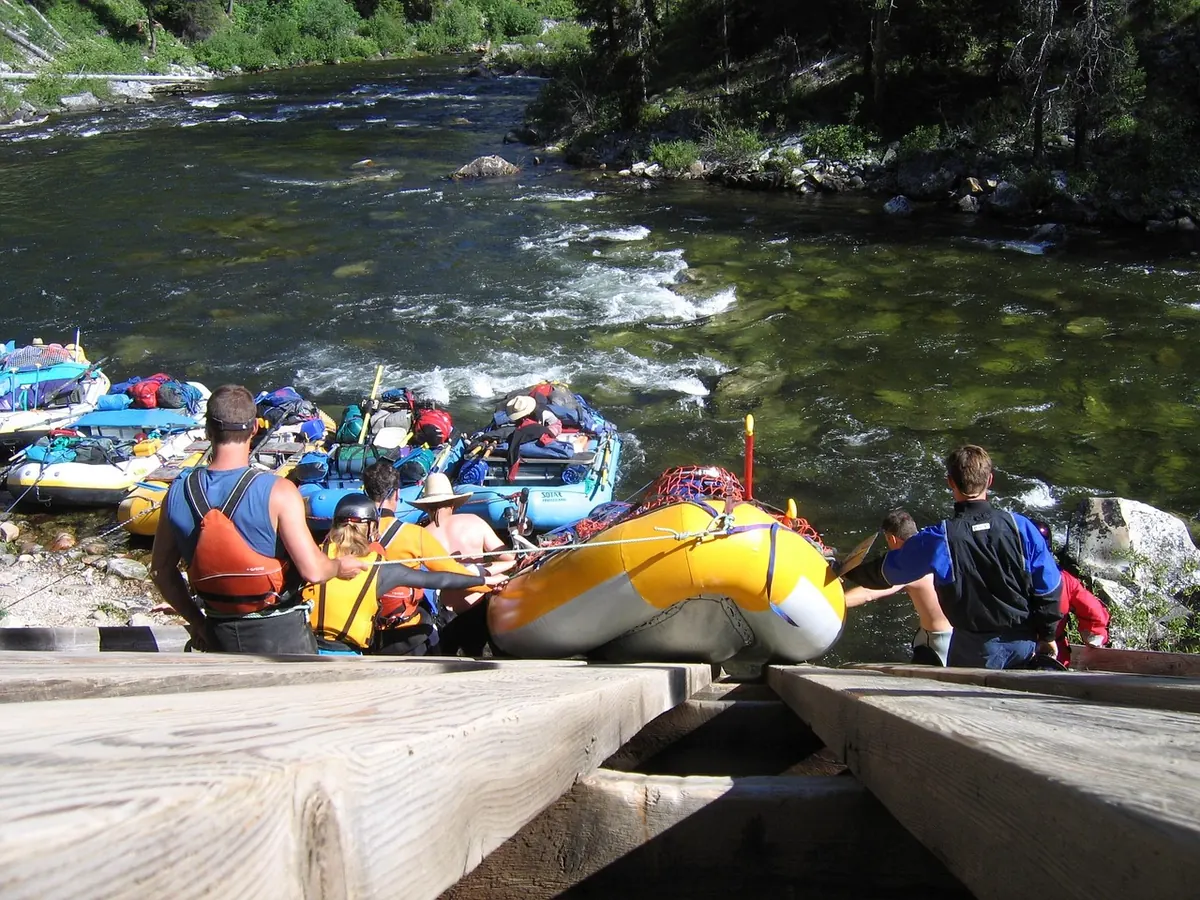
A slipway is a shared resource, and on a sunny Saturday in July it is a crowded one. The etiquette is not complicated, but it is conspicuous: nothing marks out a novice faster than a boat being rigged on the ramp while three other trailers wait.
Do the slow work — masts, oars, fuel, cool boxes, sun cream, the argument about who packed the bailer — in the car park. Roll onto the ramp ready to float, launch, and clear the water. If you are single-handed, tie a line from bow to trailer before you push off, and park the empty trailer well away from the slip while you are afloat. Recovery is the harder half of the day: approach with the tide and wind in mind, and if the ramp is busy, wait offshore rather than circling in the channel.
Rig in the car park, launch on the ramp, and be gone in five minutes. That one habit will do more for your reputation at the slipway than anything else.
On the water, the same courtesy applies. Slow down for rowers, moored boats, anglers and anyone in a small paddle craft — your wash travels a long way upstream. Give way generously and clearly, and remember that a rowing eight travelling at speed has very little ability to stop.
Reading the tide, the wind and the river itself
The Tyne's tide does not simply rise and fall; it pushes a substantial volume of water up and down the estuary, and the direction of flow decides where you can comfortably go and when you can get back. A falling tide on the lower river will carry you towards the sea faster than you expect in a slow displacement hull. Plan the day so that the flood does some of the work for you.
Wind matters as much as tide. A westerly blowing against an ebbing tide makes short, steep chop in the wider lower reaches, which is uncomfortable in a small open boat and genuinely unpleasant if you are loaded with camping gear. Sea breezes tend to build through the afternoon, so a calm morning is not a promise for the return leg. Upstream, trees and bends break the wind but also funnel it unpredictably.
Finally, look up as well as down. Bridges are part of the navigation on this river, several of them move, and a mast that clears one may not clear the next. Check heights and any bridge restrictions before you set off, and ask the harbour authority if you are unsure.
A launch-day checklist
- Check the tide times and heights for your chosen slip, and confirm the slip is usable at that state of tide.
- Confirm permission, fee or permit, and that you have a place to park a car and trailer.
- Check the weather forecast, including wind direction and the afternoon build.
- Make sure your insurance and any required registration are in order and documents are aboard or on your phone.
- Inspect the trailer: bearings, tyres, lights, winch strap and hitch.
- Rig fully in the car park, then move to the ramp only when ready to float.
- Wear a lifejacket or buoyancy aid, and carry a means of calling for help.
- Tell someone where you are going and when you expect to be back.
- On recovery, pull clear of the ramp before you start tying down and de-rigging.
- Flush the engine and wash the trailer before you leave — the Tyne is brackish for a long way upstream.
Get those basics right and the Tyne rewards you: a working river with the roar of the bridges above it, and, a few miles upstream, a slow green corridor where the only traffic is a sculler and the odd heron.
Photo: toddwmac / Pixabay